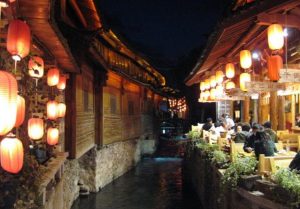
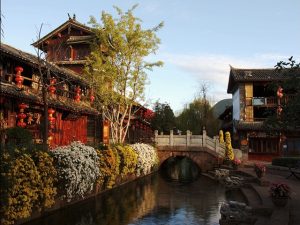
 The Lijiang Ancient Town is an alive place, where you can revel in the night; Lijiang Ancient Town is a quiet place too, where you can sit in the sun-filled courtyard for a while.
Featuring blue sky and white clouds, snow-capped mountains, smokers, or style bars, Lijiang Ancient Town is worth going.
Precautions:
1, Don’t go to places that you shouldn’t go, such as chaotic streets, such as chaotic bars. Go back and rest at night, don’t go to those messy places, don’t go to see the fun when there is noisy scene, don’t stay long, and leave as soon as possible and return to the inn.
2, Don’t argue with others. Don’t try to endure others. There is truth, but sometimes you can’t advocate heaven, but you can protect yourself. That is, don’t think that you can use justice to preside over justice.
3, Keep safe all the time when you are in Lijiang Ancient Town.
4, Don’t think that you have spent money, then all the requirements are reasonable. People should think about the problem from the perspective of others, so that’s fin e, and it will make your tour there more enjoyable.
5, There are many foreigners, most of the shops are opened for foreigners, and they are hospitable, and good to contact, so don’t be afraid, there are not so many bad people.
6, Anti-fraud guide:
Low-cost inn: Unlicensed drivers use the reason that their relatives open an inn in the Ancient Town to cheat you. Usually, such inns feature low prices and poor conditions, with the main purpose of earning high rebates.
Low-cost chartered car: The Unlicensed drivers uses the low-cost chartered car as a bait to attract you to take the car. After getting on the car, he has enough time to flicker you to go shopping, go to bad scenic spots, and eat high-snap local specialties. So you should keep an eye on this kind of unlicensed car drivers.
Black Dragon Pond Park and white sand murals need to pay 80 Yuan for the maintenance of the ancient town, which is generally collected by the inn, hotels, etc., and it can also be purchased at the gates of the ancient town and the ticket offices of various scenic spots (when playing Jade Dragon Snow Mountain Scenic Area, Mufu, Black Dragon Pool Park, etc., generally You will be asked to show the receipt of the maintenance fee of the ancient town).
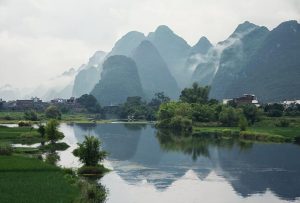 The landscape of Guilin is the best in the world, and the landscape of Yangshuo is the best in Guilin. The length of the Li River section is 164 kilometers. Most of the riverbeds along the river are watery pebbles with small amount of sediment and clear water. Most of the straits are karst landforms. The tourism resources are abundant, and the famous Guilin landscape is on the Lijiang River. The scenery of the Lijiang River is known as “gree mountain, clear water, odd caves and beautiful stone”. The 83-kilometer Lijiang River section from Guilin to Yangshuo is the essence of the Li River, as well as the wonderful scenery of “Deep pools, rapids, springs, waterfalls”. It is a typical, rich and concentrated area of karst topography, which concentrates the essence of Guilin landscape. It is a feeling of “the boat is on the blue waves, people are in the middle of the painting.”
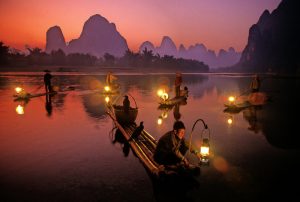 The landscape of Guilin, which has been extolled throughout the ages, is the most beautiful in the world. Perhaps it is the marvelous peaks and beautiful waters of the Li River that made the ancient people intoxicated with it and then recited this beautiful sentence for thousands of years. If you have read some verses that praise the landscape of the Lijiang River, you will feel it really beautiful. But when you are in this beautiful scenery, you will feel that the poems still can’t fully depict your mood at this moment. Perhaps it is because of people’s state of mind, and the time to enjoy the beauty is different, it is difficult to describe the beauty of this wonderful Li River. It is really worthy your visit.
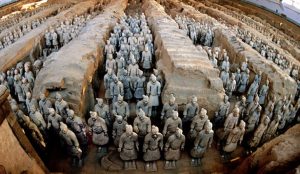 When having a tour in Xi’an, you must take a visit to The Terracotta Army Museum where you can know more about China’s history.
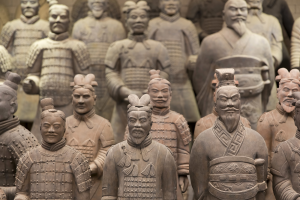 There are still many archaeological workers in the site who are responsible for cleaning and smashing the pieces. It is said that it takes at least 2 years to piece together a terracotta warrior. It is recommended to reserve enough time for visiting the terracotta warriors. If you arrange visiting the terracotta warriors on the first day or last day of the trip, you can take a free shuttle bus between the high-speed rail station and the Terracotta Warriors Museum with a high-speed rail ticket.
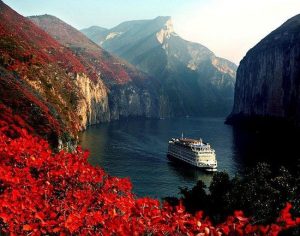 The Yangtze River gathers thousands of rivers in her process of more than 6,300 kilometers, crosses the deep mountain valleys, and plunges into the East China Sea. When she passed through the Sichuan Basin and accepted several major tributaries of the Minjiang River, Jialing River and Wujiang River, the amount of water suddenly increased, and the unstoppable momentum opened up the mountains, forming the world-famous Three Gorges.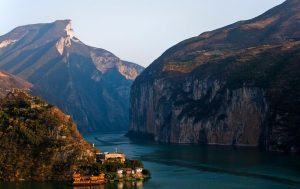
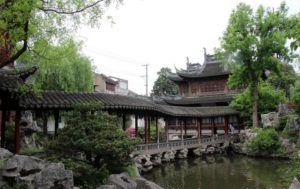 Yu Garden is located in the northeast of Shanghai’s old city, with Fuyou Road in the north, Anren Street in the east, and Shanghai Old Town Temple in the southwest. It is a classical garden in the south of the Yangtze River. It was built in the Jiajing years of the Ming Dynasty in 1590s and covers an area of more than 30 acres. In the garden, there are the three famous stones in the south of the Yangtze River: The Jade Linglong, the command post of the 1853 Small Knife Uprising, and the tourist attractions such as the Chenghuang Temple and the shopping street. Yu Garden was opened to the public in 1961 and was listed as a national key cultural relics protection unit by the State Council in 1982.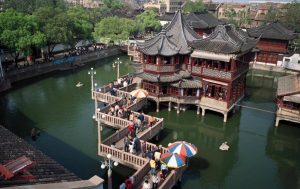
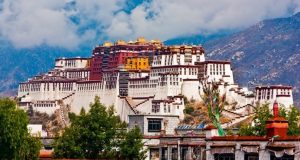 The Potala Palace is a palace, not a temple. It is politically similar to the Forbidden City and is the political center of the Tibetan region in history, not a Buddhist center. The building is divided into three parts: Snow City, White Palace and Red Palace. At this stage, there are only the East Side White Palace and some of the main halls on the east side of the Red Palace open for visiting. The west side has never been open to visitors. The tour route of The Potala Palace is very fixed. There is no turning way back. After the tour, you will leave from the mountain in the back. Here are a few things to keep in mind: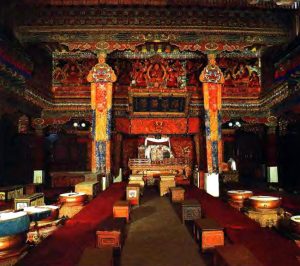
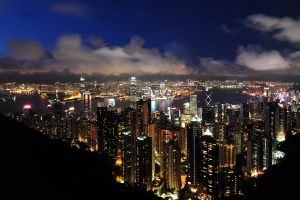 The Victoria Peak is one of the must-see attractions for your travel to Hong Kong, and the mode of transportation to go there is by Central MTR Station (No. 5), take the No. 15 double-decker bus.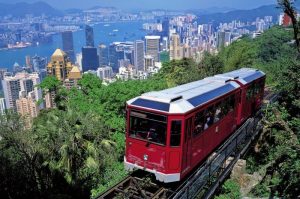
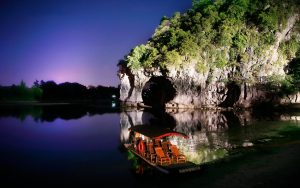
 At night, the Elephant Trunk Hill is dressed with colorful costumes. Under the background of the fisherman’s lights, a legend of Elephant Trunk Hill is staged, and if the slightly higher fare of this attraction is ignored, the night view of Elephant Trunk Hill is one of the best in the night view of Guilin.
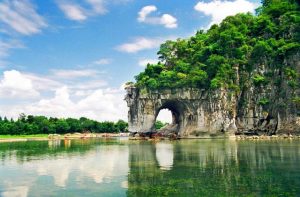
 Generally speaking, everyone goes to Xiangshan Park to take a picture of the elephant’s nose. However, as a park that is squandered by locals and tourists, Xiangshan Park’s ticket price has so far stood up, and the official website has a price of 70 Yuan for it. If you plan to shoot the elephant’s nose, go directly to the 2nd entrance and exit after entering the park, the elephant trunk is there, don’t climb the mountain, because there is nothing on the mountain. Although basically everyone understands that there is no such thing in the park, it does not stop the obsession of tourists.
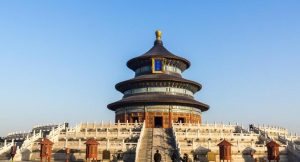 The Temple of Heaven is a special altar for the Emperor of the Ming and Qing Dynasties to worship the heavens, ask for rain and pray for the harvest. The north of the altar is round and the south is square, meaning ” round heaven and square earth.” It is divided into two parts: the inner altar and the outer altar. The northern part of the inner altar is the “altar praying for grain”. It is the place where the emperor held the grain praying Grand Ceremony in the spring, mainly including the Hall of Prayer for Good Harvests and the Emperor Hall. In the south, it is Circular Mound Altar, and it is the place where the emperor worships the heavens on the winter solstice. It mainly includes the Circular Mound Altar, the Imperial Heavenly Vault and god kitchen and the temple and the animal sacrificial pavilion.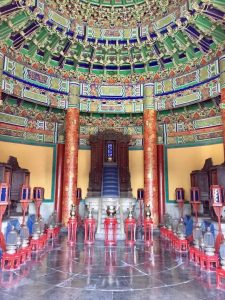
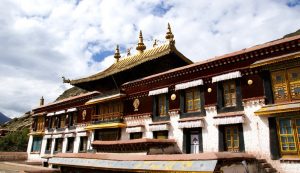 Sera Monastery, Drepung Monastery and Ganden Monastery are the three major temples in Lhasa. It was the last of the three temples to be built. There is the most famous debate ceremony in Tibetan areas. The debate was held in the northernmost debate hall in the temple. There are so many people watching the debate, and they can take a good position when coming there early.
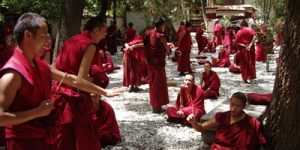 Dozens of lamas standing there, are divided into one-to-one, one-to-many, or many-to-one combinations, questioning, rebutting, refuting and then answering, using a variety of gestures, physical movements, or hands waving rosary beads, one-legged independence, even glaring at each other, vigorously claping to make a strong voice. The debate, for the monks is a practice, for tourists is like watching a lively performance.