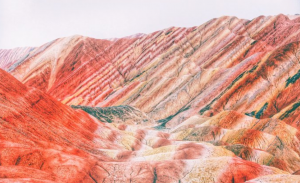
 Zhangye Danxia National Geological Park has a total of 4 observation decks, the second one is the largest, and it is suitable for watching the sunrise; and the fourth one is the most beautiful, which is suitable for watching the sunset. The first one and the third one the overtype. If you are unfortunate to meet the situation that the sun just goes into the dark cloud when you arrive at the second viewing platform, there will be no sunshine, and the Danxia landform lost color. But at the end of the third viewing platform, the sun will shine out and you can quickly reach the fourth viewing platform, where paragliding, hot air balloons, and helicopters can be experienced on the fourth viewing platform.
The sunset is infinitely good and there are many people. On the plank road, the commanding heights of the viewing platform are all full of people. You can squeeze hard on the plank road and stand at the high point and look at the gorgeous Danxia, as this scenery is really very beautiful. The opposite side of the mountain is brilliant, and the saturation contrast just like the PS. Visitors who are sure to take a glider should have a better visual experience.
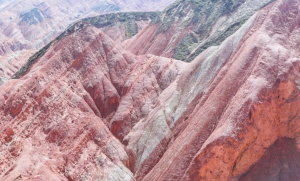 The setting sun of Danxia landforms is not good, the mountains are too high, and they are all blocked. It is not as wide as the sea level. If you want to see the sunrise, you can go there earlier, as there are also many people in the morning. The ticket office at the entrance still is lined up long queues. After entering the park, just go straight to the 2nd observation deck, and arrive at the highest point of the observation deck at 6:10 a.m., to wait for the sunrise. The sun at sunrise is still glaring, but it is really beautiful.
When the Zhangye Danxia National Geological Park is under the scorching sun, the color of the light and shadow is like a panoramic oil painting. When it is under the light of the rising sun, it seems to be wearing an orange coat, sparkling with different colors, and the colorful light and shadow transforms.
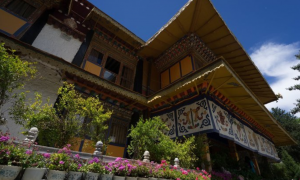 Norbulingka means “baby garden” in Tibetan language. It is the summer palace of the Dalai and Lama (the Potala Palace is the Winter Palace). Some people also call it “the Summer Palace of Lhasa.” The garden is very distinctive, and it has the shadow of Tibetan culture and also absorbs the traditional methods of gardening in the interior. There is a new palace inside, and its architecture, murals and decorations are the integration of the essence of Tibet’s major temples, palaces and buildings. It can be said that visiting the new palace is like browsing the entire Tibetan building. There are hundreds of plants in the Norbulingka, including many famous flowers such as Tibetan hydrangea, so it is also known as the Plateau Botanical Garden. During the festival, special activities such as Tibetan opera performances can be seen. Tibetans will sit in Norbulingka with tents and food, and chat with friends and family.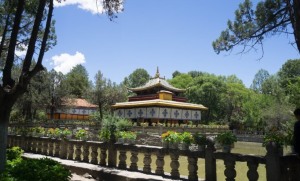
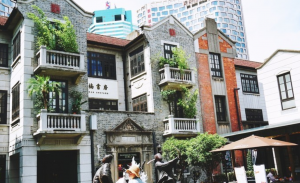 Some people say that Shanghai Xintiandi is like Beijing Sanlitun. It seems that there is such a point, but it is more formal than Beijing Sanlitun, as Shanghai Xintiandi is full of petty bourgeoisie.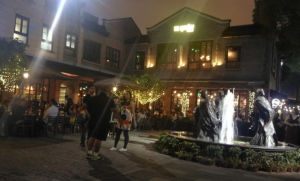
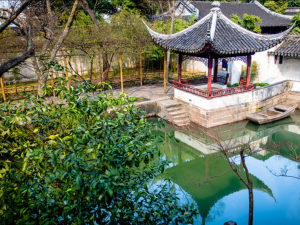 Without viewing garden, it feels like you have never been to Suzhou. Humble Administrator Garde is very delicate in structure and architecture. The details are hidden in the meaning you don’t know. You must once again sigh the wisdom of the ancestors. Modern people are far worse than the ancestors.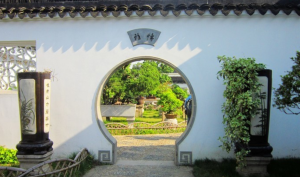
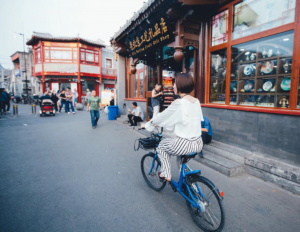 The simple alley has not been transformed and is the most authentic face. There are a lot of famous Hutongs in Beijing, such as Maoer Hutong, Bean Hutong, South Downs Hutong, and so on. While shopping, you can also just pass through the alley and go to Shichahai. There is a bright red five-star red flag in the hutong. This is the atmosphere of the festival. This is the feeling of the country and the family. There are many stalls in the hutong that sell candied haws. Come to Beijing, and the candied haws should also be tasted.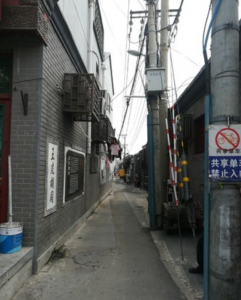
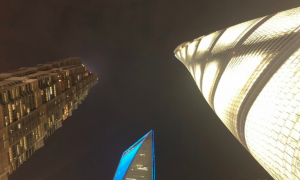 In the Shanghai Tower, it costs 180 yuan/person on the 118th floor and 360 yuan/person on the 126th floor. At the 118th floor, the field of view is not very good (if it is sunny, it is really a whole view of Shanghai), even if you are on the 126th floors, you can’t see anything.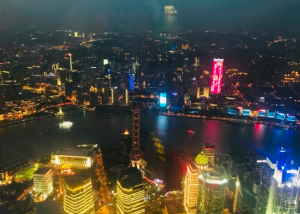
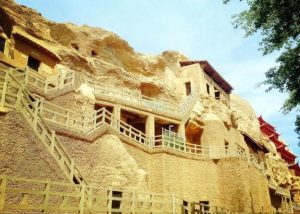 The management of Mogao Caves is still very good. Buy tickets generally in the official website one month in advance, then you can see 8 caves! If you don’t buy the ticket from the official website, you can buy an emergency ticket in Dunhuang one day in advance to see 4 caves! To tell the truth, the cave is very shocking, it is the intangible cultural heritage of the Chinese nation, but it is too little caves that allow to be viewd, only to show you a few representatives! You need to go to the museums and art galleries inside to learn more about the history and greatness of the Mogao Caves! No photos are allowed inside, and visitors are queued for half an hour for viewing a very short time during the peak season.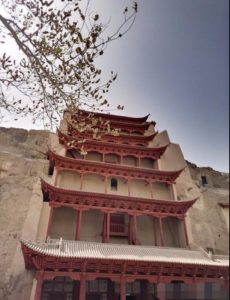
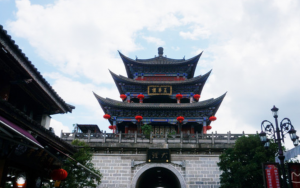 On the streets of the Dali Ancient Town, people come and go, and almost every store in every street, there is a lot of visitors. However, the downside is that every street, or the next street in the corner, it is too repeatable. You can see a lot of flower cake shops, the jewelry stores, the clothing store selling the same clothes, the tea shop selling the same tea; and a lot of restaurants, which are really repeatable. There are also many taverns where folk singers are resident.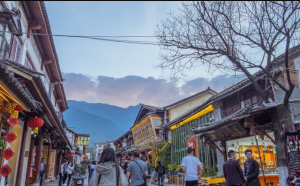
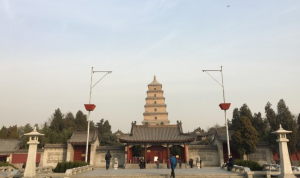 The Big Wild Goose Pagoda was presided over by the Xuan Zang Master. Although it has been vicissitudes for thousands of years, it is still intact. It is one of the famous Buddhist pagodas in China, and it is also a unique symbol of the ancient city of Xi’an. The Big Wild Goose Pagoda is a pavilion-style brick tower. The tower body is made of bricks with a square cone with a staircase spiraling up. There is a vault door in each side of each floor, and the view of Chang’an is unobstructed. On the two sides of the south gate of the pagoda, the “Da Tang Sanzang Holy Preface” monument was set by Xuanzang during the Tang Emperor’s reign, and they are well preserved. It is worth mentioning that the Tang Dynasty painters Wu Daozi and Wang Wei had made many murals for the Ci’en Temple, but unfortunately, they were already disappeared in history. However, on the stone door sills and door frames of the four-door cave under the Big Wild Goose Pagoda, there is still a beautiful Tang Dynasty line depiction.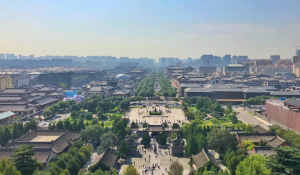
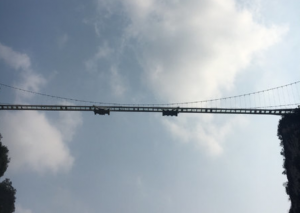 When taking a tour to Zhangjiajie, you are highly recommended to have a visit to the Zhangjiajie Grand Canyon, whose glass bridge will make your travel there unforgettable.
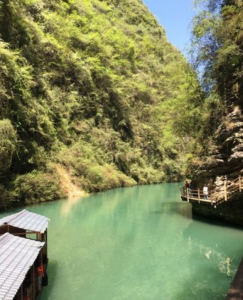 The bridge Bungy of the Grand Canyon is still under construction, and friends who like it can look forward to it. But it is not so recommended to you, because the scenery is really not the best, the scenery on the mountain is not as good as the Tianmen Mountain, Tianzi Mountain, Yangjiajie, Yuanjiajie, and the scenery of the canyon is not comparable to the Golden Whip Creek. The only thing that worthy experiencing is walking on the glass bridge. The bridge, but not scary at all, is not a full transparent glass, it should be inlaid with dozens of transparent glasses in the middle of the frosted glasses. The glass is also not very clear. Compared with the fare, the price/performance ratio is not so high, so it is the least recommended. It is said that the scenery under the bridge is completely invisible on rainy days. But if you still want to explore more there, it is also a good attraction for you.